If your drafts folder is a graveyard of novels that stopped at Chapter 8...
Finish a Coherent 20-Chapter True Crime Adjacent Novel With AI Without Losing The Names, Clues, Timeline, or Ending.
"True Crime Vault" gives you 500 detailed fictional case briefs and a chapter-by-chapter writing system designed to keep your story consistent from Chapter 1 to Chapter 20. A fresh new method.

From the Desktop of:

Alessandro Zamboni
⚠ Warning
If you've ever tried to write a full-length fiction book with AI and watched the investigative voice collapse by Chapter 3, this is the most important page you'll read today.
What Makes Investigative Fiction So Addictive?
Dear Writer,
Let me describe the exact book you're trying to make.
Not a slasher. Not a cozy village whodunit. Not an action thriller. You want the book that reads like the best true-crime documentary you've ever watched — the calm, forensic voice walking you through how it happened.
How the forger fooled three museums for fifteen years. How the "investment club" paid out for decades before it collapsed. How an entire town looked away while a woman quietly disappeared.
The pull isn't a body on page one. The pull is watching a scheme, a deception, or a disappearance get taken apart piece by piece, document by document, until you understand exactly how a real person pulled it off — and why so many people let them.
That voice is the whole product. And AI, left on its own, cannot hold it for twenty chapters.
You've lived this. The first chapter comes out perfect — measured, atmospheric, exactly the register you wanted. You're thrilled. You type "continue."
And it starts to drift.
The AI forgets the investigator's name. The timeline shifts without explanation. The provenance document you introduced in Chapter 4 is never mentioned again. The story wanders into something generic and predictable. By Chapter 8 you're spending more time correcting continuity than you'd have spent writing it by hand.
By Chapter 12, the AI is inventing people. Characters appear from nowhere. The measured, investigative tone you worked so hard to build slides into something that reads like a bored first draft.
And the ending? There isn't one. The story just... stops. Or it wraps up in three rushed paragraphs that answer none of the questions you spent twelve chapters building.
You close the tab. You tell yourself you'll try again tomorrow. Tomorrow looks exactly the same.
Here's the truth nobody tells you: the problem was never your idea. Your idea was probably great. The problem is that AI, left to its own devices, has no memory, no discipline, and no respect for the reader's investment in your story.
Without a real, engineered, battle-tested framework, every AI fiction attempt is just organized chaos. And that's exactly why most self-publishers who try AI fiction quit before they ever publish a single book.
Exhibit A
The Dirty Secret Of AI Fiction That No One Talks About
Think about what it actually takes to write a compelling 20-chapter true crime adjacent novel.
You need a premise with enough depth to sustain twenty chapters of investigation, tension, and revelation. You need a cast — investigator, perpetrator, witnesses — whose names, motives, and relationships stay consistent from the first page to the last. You need details planted early that pay off late: the document, the discrepancy, the small lie. You need red herrings that feel genuine, not cheap. You need pacing that tightens chapter by chapter, begins closing threads at exactly the right moment, and lands a final chapter that answers every question the reader has been holding since Chapter 1.
That is an enormous amount of structural work. Novelists spend years learning it. Documentary writers study the investigative voice for a decade.
And you're asking an AI — a tool with no long-term memory, no inherent sense of story architecture, and no investment in your reader's satisfaction — to do all of it on its own.
Of course it fails.
The writers who succeed with AI fiction aren't just using better prompts. They're using a system — a disciplined, engineered system that forces the AI to behave like a professional author instead of an eager but forgetful intern.
That system exists. Today, you can have it.
Introducing
The 500 True Crime Adjacent Prompt Vault
— with the Master True Crime Vault —
This is not a list of writing ideas. This is a complete, end-to-end fiction production system. At the heart of it is something we call the True Crime Vault.
The True Crime Vault is a master prompt — a precisely engineered set of instructions you paste into your AI tool once, at the start of every project. From that moment on, the AI is no longer an unreliable collaborator. It becomes a disciplined co-author bound by a strict set of rules designed to produce a complete, satisfying, publication-ready novel.
Here is what the True Crime Vault forces the AI to do, every single time:
One chapter. Then silence.
Writes only one chapter at a time, then stops completely. No rushing ahead. No summarizing. One chapter, fully written, then silence until you say "next."
Re-reads everything before every chapter.
Every character name. Every established fact. Every document already introduced. Every red herring already deployed. Designed to dramatically reduce continuity mistakes.
Maintains a private case file.
A hidden ledger of planted facts and open threads. The detail you introduced in Chapter 4 is still alive and accounted for in Chapter 17.
Begins closing threads at Chapter 15.
No new major characters. No new subplots. Only the careful, deliberate closing of every door the story has opened.
Chapter 20 is a real ending.
Every major question gets answered. No cliffhangers. No trailing off. A resolution that rewards the reader for every chapter they invested.
Chain of Custody
This is the framework that makes everything else possible.
Exhibit B
And Then There Are The 500 Premises
Because a great system without great raw material is still just an empty engine.
That's why this package includes 500 meticulously crafted "Case Briefs" — premises so rich, so specific, and so deeply thought-through that each one contains the seeds of a complete novel.
These are not vague, generic ideas like "a detective investigates a murder." These are fully realized scenarios with built-in tension, built-in methodology, and built-in emotional stakes.
Spanning 20 categories — cold cases, forensic puzzles, missing persons, cult investigations, historical mysteries, and more — every brief is a complete book waiting to happen.
500 premises. 500 potential novels. Unlocked the moment you're inside.
Vault Contents
The 20 Categories Inside The Vault
Small-Town Disappearances
The people who vanish from communities that should have noticed.
Wrongful Convictions & Exonerations
Junk science. Coerced confessions. Corrupt lab work.
Cults & High-Control Communities
Wellness retreats that never let you leave.
Corporate Cover-Ups & Whistleblowers
The defect memo. The falsified logs. The contaminated batch.
Financial Fraud & Ponzi Schemes
The community investment club. The trusted advisor.
Cold Cases Reopened
The digitized file. The DNA match. The retired investigator's notebook.
Family Inheritance & Domestic Mysteries
The locked room. The second will. The DNA test.
Prepper Compounds & Survivalist Groups
The bunker community that requires your assets.
Serial Con Artists & Identity Fraud
The borrowed name. The recurring husband.
Pattern Crimes Across Time & Place
Crimes only visible when someone connects the dots.
Wilderness & At-Sea Disappearances
The lighthouse keeper's wife. The ferry captain.
Hospitality & Small-Business Crimes
Crimes in plain sight, where people trust most.
Campus & Academic Mysteries
The university. The research lab. The seminar.
Corporate Espionage & Trade Secrets
The stolen formula. The planted employee.
Rural & Farm Community Secrets
The land dispute. The thing buried on the property.
Old-Money Estate Mysteries
Families with too much history to discuss.
Medical Mystery & Hospital Cover-Ups
The diagnosis that was wrong. The death ruled natural.
Journalist & Podcaster Framing Devices
Stories told from inside the investigation.
Small-Town Police & Political Corruption
The cases that didn't get solved on purpose.
Suburban Neighborhood Secrets
Crimes hiding behind well-maintained lawns.
Case Note
What "True Crime Adjacent" Actually Means — And Why It's The Most Durable Genre You Can Publish In
Most people hear "true crime" and picture blood. That's not this.
True Crime Adjacent isn't defined by the crime. It's defined by the treatment — the investigative, journalistic voice readers are addicted to from podcasts and documentaries. The measured unraveling. The psychology of the person who did it and the people who believed them. The documents: the authentication letter, the wire log, the case file, the second will. The deep satisfaction of understanding exactly how it was done and why it worked for so long.
That treatment works across every kind of crime — and that's the whole point.
A vanished teacher a town quietly replaced. A forensic dentist still testifying on junk science. A wellness founder who won't let members leave. A researcher who finds the buried trial data. A man living for decades on a dead stranger's paperwork. Violent or not, financial or personal, small-town or corporate — told in this register, they all deliver the same experience the genre's enormous audience already craves.
And here's why it beats writing real true crime.
The moment you write about real cases, you inherit real problems: privacy law, defamation exposure, endless fact-checking, records you can't access, families you could hurt. Adjacent fiction gives your reader the identical emotional experience — the voice, the atmosphere, the clue-by-clue reveal, the psychology — with invented names, invented towns, invented cases. All of the demand. None of the liability.
Now the part that matters most for your business.
This genre does not age. It isn't built on a trend, a headline, or a platform. The investigative voice was compelling fifty years ago and it will be compelling fifty years from now. None of these 500 premises reference a current event or a piece of technology that can go stale. Publish one today or one in 2032 — it reads exactly the same.
That's not a content product. That's infrastructure that survives every shift in the market.
Evidence Log
The Real Cost Of Trying To Build This Yourself
Let's be honest about what it would take to create this on your own.
Writing 500 unique, compelling premises — each specific enough to sustain a full novel, each distinct from the others, each carrying genuine narrative tension — would take you months. Possibly a year. And that assumes you've already developed the storytelling instincts to write premises at this level, which most people simply haven't.
Engineering a master prompt that reliably forces an AI to hold continuity across 20 chapters, remember every planted fact, pace the story correctly, and deliver a satisfying ending — that takes hundreds of hours of testing, failing, adjusting, and failing again. It's not something you figure out in an afternoon.
We have already done all of that work. Every hour of testing. Every failed attempt. Every refinement. The result is sitting in this package, ready to use today.
You're not paying for ideas. You're paying for the months of work that made those ideas usable.
Projected Output
What This Means For Your Publishing Business
One premise plus the True Crime Vault equals one complete, 20-chapter book. You have 500 premises.
That is 500 books. A catalog that would take a traditional author a lifetime to produce — one you can build, systematically, one book at a time, at whatever pace your business demands.
Launch one book a week and you have nearly ten years of content. Launch five a week and you have two years of it.
The True Crime Vault is reusable with every premise in this pack — and with every new premise you write in the same style in the future. None of the 500 depend on a specific technology, a specific platform, or a current event. They are evergreen. They will be just as publishable in five years as they are today.
This is not a trend product. This is infrastructure.
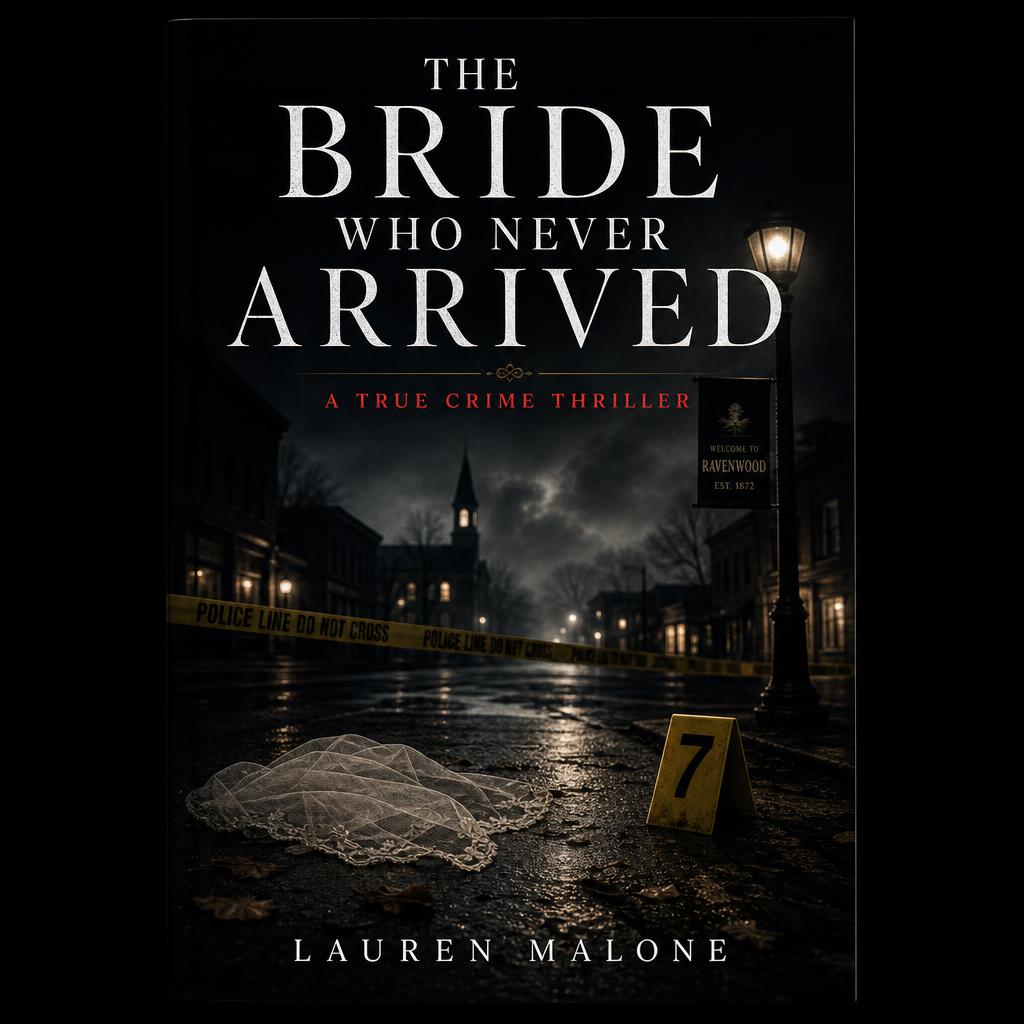
Bonus Tool
Professional Cover Generator Included
Every finished novel deserves a cover that looks like it belongs on a real bookshelf. That's why this package also includes a complete Cover Generator built specifically for the true crime adjacent genre.
No design skills. No expensive designer. No hours wrestling with stock photos. Just paste your title, pick your atmosphere, and generate a publish-ready cover in minutes.
- §Genre-specific templates: dark, documentary, investigative
- §Automatic title and author typography that looks professional
- §Works with every case brief in the vault — one cover per book
The book gets written here. The cover gets made here. Everything you need to publish.
Verdict
This Is Your Decision Point
You can keep doing what you've been doing. Staring at blank screens. Watching AI-generated stories lose the thread halfway through. Publishing nothing — or publishing work that doesn't reflect what you know you're capable of.
Or you can get the system. The 500 premises. The Master True Crime Vault. The complete production infrastructure that turns a single afternoon into a publication-ready chapter, and a single week into a complete book.
The writers who build real self-publishing businesses aren't the ones with the best ideas. They're the ones with the best systems.
This is the system. Get it today.
Instant Access · Evergreen · Yours Forever
To your publishing success,
Alessandro Zamboni
P.S.
The True Crime Vault alone is worth more than the price of this entire package. It's an evergreen tool that works with any story idea you'll ever have — not just the 500 included here. Every premise you write in the future, every idea that hits you at 2am, every category you decide to explore — the True Crime Vault works for all of it. You're not buying a one-time resource. You're buying a permanent part of your publishing workflow. Get it now.
P.P.S.
Think about the last time you tried to hold that investigative voice for a full book with AI, and watched it fall apart by the middle. Now imagine that never happening again. That's what this system delivers. One premise. The True Crime Vault. One complete book. Every time. Secure your access today before the price changes.